
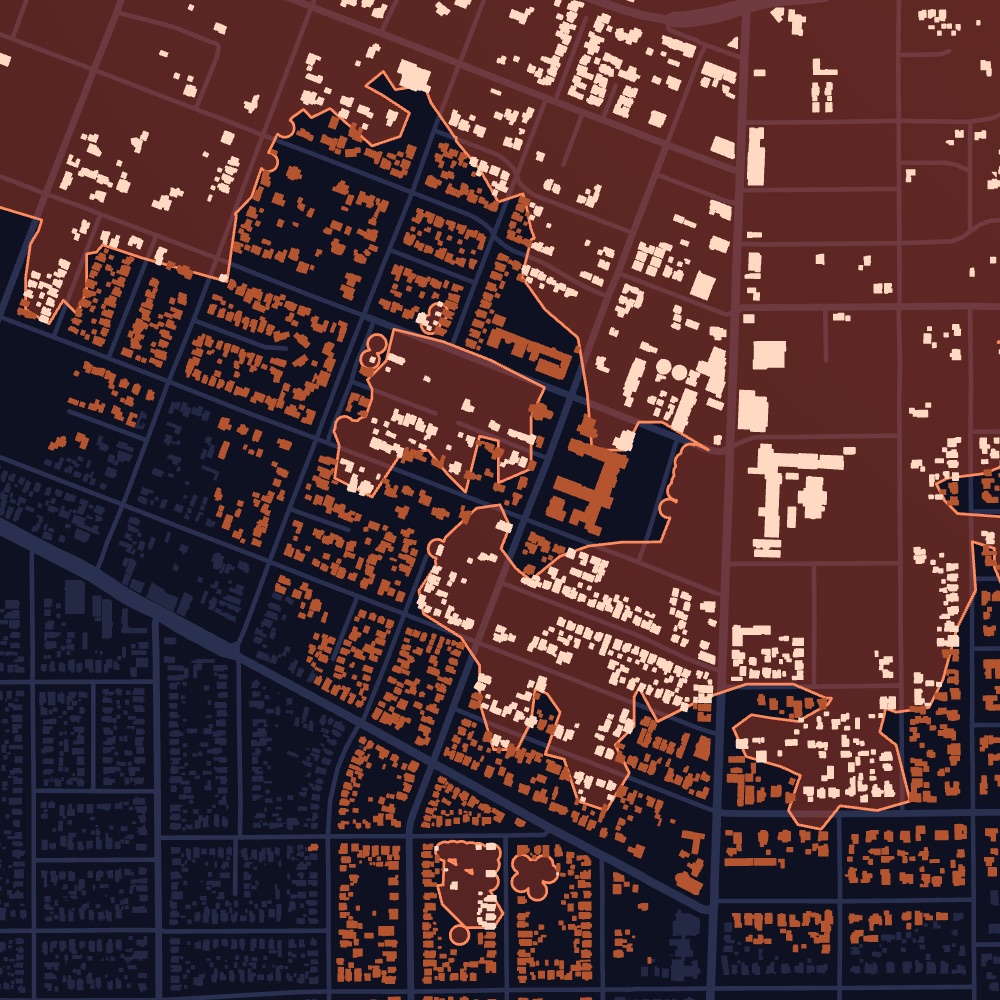
Storm Restoration: Where to Send Crews After a Flood or Tornado
After a flood or tornado, send crews to the specific streets and properties with confirmed damage, not to the whole county named in the warning. Read the event first (tornado path, flood extent), check ground reports, list the properties inside the damage, sort them by property type and owner, and deploy in order of what your crews can actually finish. This playbook walks through each step.
Why "the county got hit" is not a plan
Warnings and news reports describe storms at the county or city level. Damage does not work that way. A tornado path can be narrow enough that one side of a street is damaged and the other is not. A flash flood can fill one neighborhood along a creek and leave the next one dry. Crews sent to the county end up driving, knocking and calling on properties that were never touched.
The scale is real. According to NOAA's Storm Prediction Center, there were 1,383 tornadoes in the United States in 2025, and NOAA's National Centers for Environmental Information recorded 7,374 flood and flash flood events that year not tied to tropical systems. Most of them hit a small area hard. The job is finding that area.
Step 1: Read the event
Tornadoes
Start with the path. The National Weather Service surveys significant tornadoes and publishes the track, width and rating on the Enhanced Fujita scale. The rating tells you what kind of damage to expect along the path, from roof and siding damage to destroyed structures. Our guide to the EF scale and property damage explains what each rating means for buildings.
For restoration, the most useful areas are often along the edges of the path, where buildings are damaged but still standing. Those properties have open roofs, broken windows and water coming in, and they need mitigation now.
Floods
For floods, look at where water actually went: river gauges, flood extent, high water marks and reports of water in structures. Ground floors, basements and crawl spaces in the flooded area are your work. Properties just outside the extent may have no water at all.
Ground reports
Check the National Weather Service Local Storm Reports for the event. They record reported damage, flooding and measurements with locations and times. Our guide to NWS Local Storm Reports covers how to read them.
Step 2: List the properties inside the damage
Once you know the affected area, build a list of the properties in it. Official damage reports and property records can help you narrow it down. For each property, you want:
- Address and property type (single-family, multifamily, commercial, industrial)
- Owner of record and owner type (individual, LLC, management company)
- How badly it was likely hit
This turns a weather event into a work list.
Step 3: Prioritize
Not every damaged property is the right job for your company today. Sort the list.
| Priority | What it looks like | Why |
|---|---|---|
| First | Damaged but standing buildings with water getting in | Mitigation is urgent and the building can be saved |
| First | Multifamily and commercial properties with one decision-maker | One contact can mean many units or a large loss |
| Second | Flooded basements and ground floors in residential streets | High volume, fast drying jobs |
| Third | Destroyed structures | Often demolition and rebuild, not mitigation |
| Skip for now | Properties outside the confirmed damage | Little or no work |
Adjust the order to your strengths. A company with large-loss equipment should go to the commercial buildings first. A company with many small crews may work residential streets block by block.
Step 4: Plan crews and capacity
Before you commit, count what you have:
- Crews and equipment. Dehumidifiers, air movers, extraction units, generators if power is out.
- Drive time. Can crews get there and back, or do you need lodging?
- Materials. Tarps, board-up materials, containment.
- Office support. Someone to schedule, take calls and keep documentation in order.
- Rules. Check state and local rules on contractor licensing and solicitation after a disaster, including any temporary rules after a declaration.
Take only what you can finish well. Half-dried buildings and missing documentation follow your company long after the storm.
Step 5: Deploy and contact owners
Send crews to clusters, not single addresses spread across the map. Work one area completely before moving to the next.
For owner contact, keep the message practical: the event, the property, what you can do today and how to reach you. Leave the decision with the owner and respect the rules where you are working.
Step 6: Log every property
For each property on your list, record whether you contacted the owner, the outcome and the job size. After a few events, you will know which property types, damage levels and parts of a storm actually produce work for your team.
Storm response checklist
- Event footprint confirmed (path or flood extent)
- Local Storm Reports reviewed
- Property list built inside the footprint
- Properties prioritized by damage, type and owner
- Crews, equipment and materials counted
- State and local rules checked
- Crews deployed by cluster
- Every contact and outcome logged in your CRM
How Dorothy helps
Loss Engine monitors your territories for tornadoes, floods, hurricanes, wildfires and structure fires, finds the properties inside the damage down to the building, matches each one to its owner of record and delivers the ones that fit your criteria to your team on your schedule, in HubSpot, Pipedrive or CSV. You get a prioritized property list instead of a county name. Envoy can run owner outreach within each state's rules.
Frequently asked questions
Where should I send crews first after a tornado?
To damaged but standing buildings along the path, especially multifamily and commercial properties, where water is getting in and mitigation can still save the structure.
How do I know which streets flooded?
Look at official reports of where water reached, such as Local Storm Reports of water in structures, and confirm on the ground before you commit crews. Properties just outside the extent are usually not worth a crew.
Should I travel to storms outside my territory?
Only if you can staff it, meet the licensing and solicitation rules there and finish the jobs well. Many companies do better with deep coverage of their own territory.
How fast should I deploy after a storm?
As soon as the footprint is confirmed and conditions are safe. Water damage gets worse by the day, so a short delay to confirm where the damage is usually saves more time than it costs.