
EF Scale Damage Explained for Property Professionals
The Enhanced Fujita (EF) scale is the standard way tornadoes are rated in the United States. For property professionals, the important thing to understand is that an EF rating describes the worst damage found along a tornado's path, not the damage at every address it crossed.
What the EF scale is
The National Weather Service began using the EF scale on February 1, 2007, replacing the original Fujita scale. The update tied wind estimates more closely to how real buildings and structures fail.
The EF scale rates tornadoes from EF0 to EF5 based on estimated 3-second wind gusts. Those wind speeds are not measured directly. They are estimated from the damage the tornado left behind.
EF ratings and typical damage
| Rating | Estimated 3-second gust | Typical damage |
|---|---|---|
| EF0 | 65–85 mph | Light: some roof surface peeled off, damage to gutters or siding, branches broken |
| EF1 | 86–110 mph | Moderate: roofs severely stripped, mobile homes overturned or badly damaged, windows broken |
| EF2 | 111–135 mph | Considerable: roofs torn off well-built houses, frame homes shifted off foundations, large trees snapped |
| EF3 | 136–165 mph | Severe: entire stories of well-built houses destroyed, heavy damage to large buildings |
| EF4 | 166–200 mph | Devastating: well-built houses leveled |
| EF5 | Over 200 mph | Incredible: strong frame houses leveled and swept away, reinforced concrete structures badly damaged |
The descriptions are general. Actual damage depends on how each structure was built.
How a tornado gets its rating
After a tornado, NWS staff conduct a damage survey. They look at damaged structures and trees along the path and compare what they see to the scale's damage indicators.
Damage indicators and degrees of damage
The EF scale uses 28 damage indicators. Each is a type of structure or object, such as one- and two-family homes, manufactured homes, schools, strip malls, warehouses, metal buildings, towers and trees. For each indicator there is a set of degrees of damage, from barely visible damage to total destruction, each tied to a range of estimated wind speeds.
This is why construction matters. The same wind can leave a well-anchored building standing and destroy a poorly anchored one nearby. Surveyors account for construction quality when they assign a wind estimate.
The rating is the maximum
A tornado's final rating reflects the highest damage found anywhere along its path. An EF3 tornado may have produced EF3 damage on a short stretch and EF0 or EF1 damage across most of its track.
When there's nothing to rate
If a tornado crosses open land with no damage indicators, there may be nothing to rate it by. The NWS can assign an "EF-Unknown" (EFU) rating in those cases.
What this means for property work
Don't assume the rating applies to every property
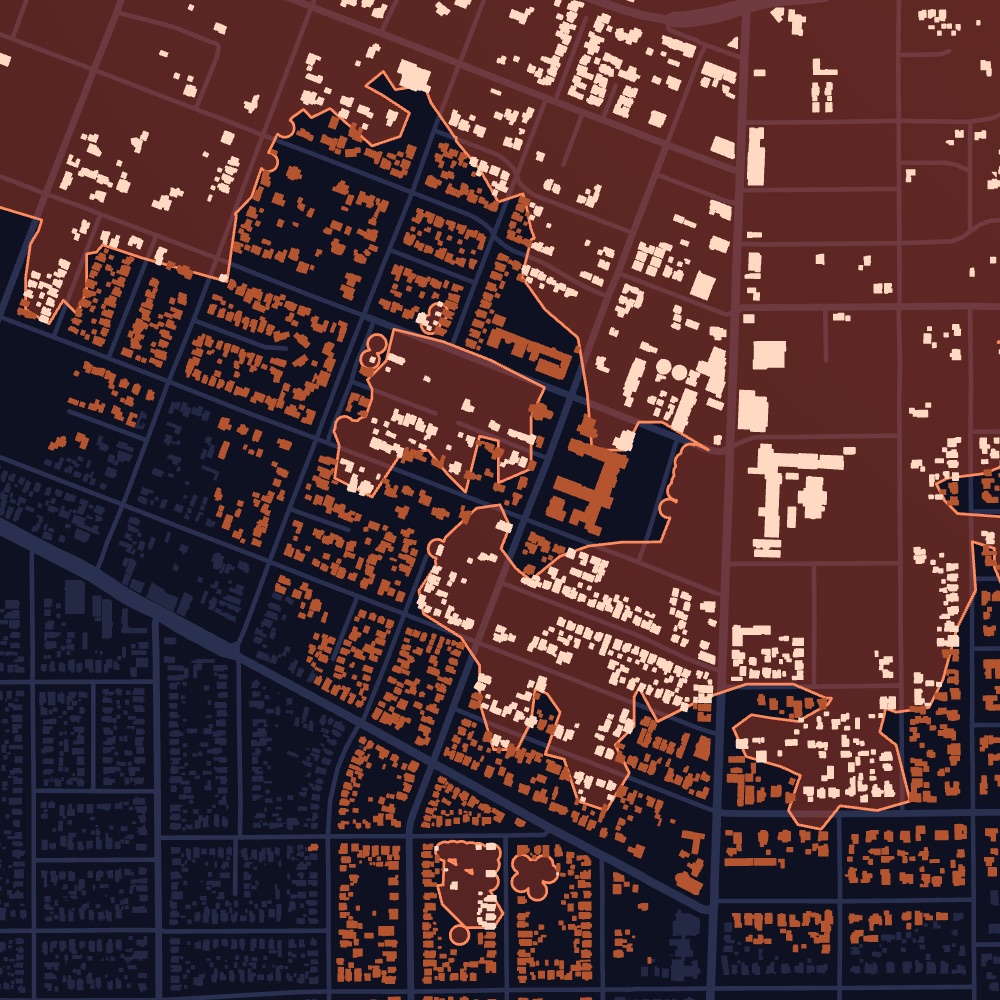
The single most common mistake is treating the overall rating as the damage level at every address. A property near the edge of the path or along a weaker segment may have seen far less wind than the peak. Work from damage along the path, not the headline number.
Paths have width and length
Tornado paths are surveyed as tracks with a length and a maximum width. Properties inside the track can see very different conditions. Properties just outside it may still have damage from debris or the surrounding winds, so check the edges.
Ratings can change
Initial reports and preliminary ratings may be revised as surveys continue. Use the final survey for claims and litigation, and note the date you pulled the data.
Tornado vs. straight-line wind
Not all wind damage comes from tornadoes. Thunderstorm downbursts and straight-line winds can cause serious damage over wide areas. Damage patterns differ: tornado damage often shows debris thrown in multiple directions, while straight-line wind damage tends to point one way. The distinction can matter for how an event is documented and how the claim is handled.
Damage by property type
Tornado damage looks different across property types, and every type in the path deserves attention.
- Residential. Roof coverings, roof decks, windows, garage doors and siding are common points of failure. Garage doors and large openings can let wind in and raise pressure inside the building.
- Manufactured homes. Usually more vulnerable than site-built homes at the same wind speed, especially if not properly anchored.
- Multifamily. Large roofs and repeated openings across many units; one owner may control several damaged buildings.
- Commercial. Large-span roofs, storefront glass, signage and rooftop equipment.
- Industrial. Metal buildings, wall panels, overhead doors and large roof areas.
- Agricultural. Barns, grain bins, equipment sheds and outbuildings. Rural paths often have fewer ground reports, so damage can go under-documented.
Using ground truth with EF ratings
Survey results are the authoritative source for a tornado's track and rating. Supporting evidence helps fill in the picture at a specific property:
- NWS Local Storm Reports with tornado sightings and damage remarks near the property. See our guide on Local Storm Reports.
- Before/after imagery showing roof loss, debris and structural change.
- Date and time confirmation, especially in outbreaks where several tornadoes cross the same area. See how to verify date of loss.
Key takeaways
- EF ratings are damage-based wind estimates, not measurements.
- The rating reflects the worst damage along the path.
- Damage at any one property can be far less, or more, than the headline suggests depending on location and construction.
- Use the final survey, path width and nearby ground reports together.
- Look at every property type in the path, not only homes.
How Dorothy helps
- Tornado modeling shows the properties a tornado affected down to the building, and how badly each one was likely hit.
- Each property is matched to its property details and owner of record.
- Loss Engine delivers the properties that fit your criteria to your team on your schedule.