
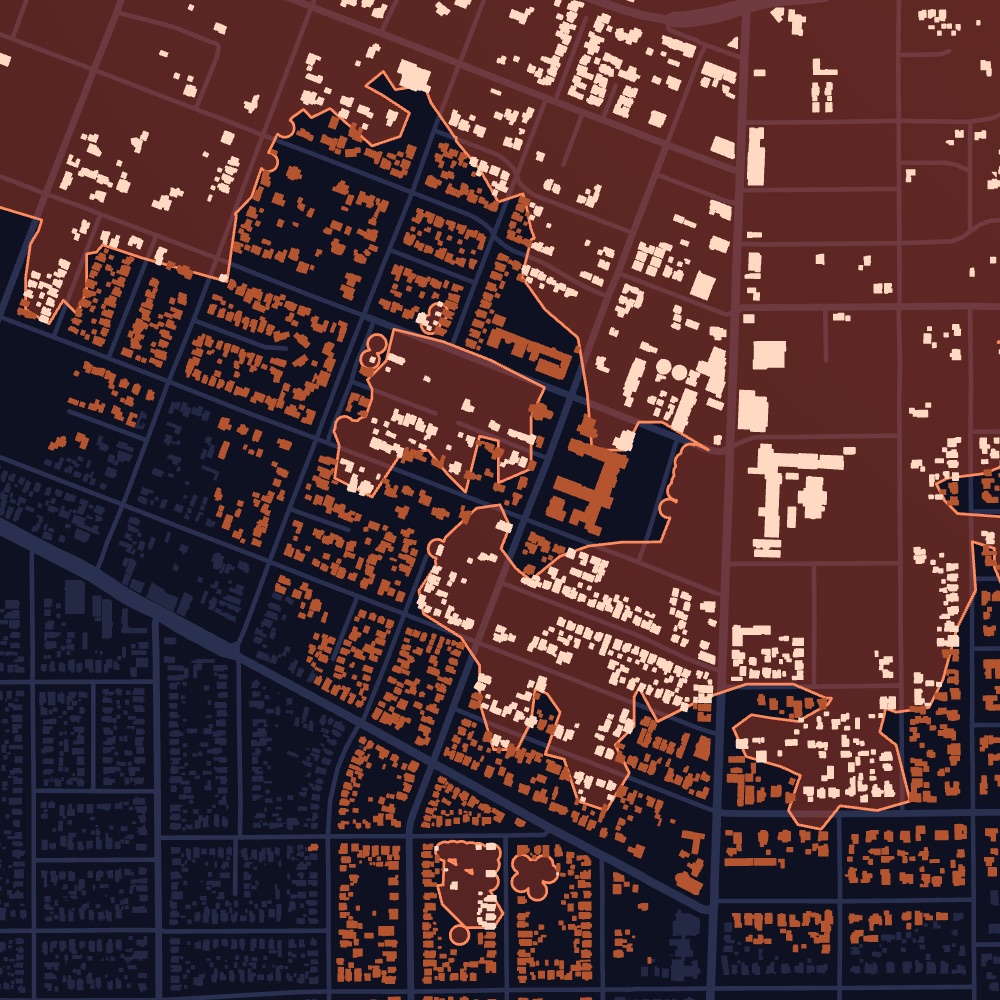
How to Find Hail-Damaged Properties After a Storm
After a hail storm, the hard part isn't knowing that it happened. It's knowing which specific properties were hit, how hard, and who owns them. This guide lays out a repeatable workflow you can use after any hail event, for any property type.
Why "hail hit the county" is not enough
Hail falls in swaths. A single storm can drop large stones on one neighborhood and nothing on the next one over. Hail size can change over short distances, and the strongest cores are often narrow.
That's why county-level or ZIP-level summaries cause trouble. They overstate the area that needs attention and hide the pockets that actually took damage. Teams end up driving streets with no damage while missing blocks that were hit hard.
The goal is to work at the property level: this building, this hail size, this wind speed, this owner.
Step 1: Map the hail swath
Start with the footprint of the storm. Two things matter most:
- Hail size across the swath. You need the estimated maximum size at each location, not one number for the whole storm.
- Wind speed during the hail. Wind-driven hail hits at an angle. It can damage siding, windows, screens and the windward side of a roof that straight-down hail might spare.
Look at the swath as a gradient, not an outline. The edges of a swath often carry small hail that is unlikely to damage most roofs. The core is where the real exposure sits.
Step 2: Filter by the hail sizes that matter
Not all hail is worth a site visit. The National Weather Service treats hail of 1 inch in diameter (quarter size) or larger as severe. That's a useful starting filter, but it isn't a damage rule.
Whether hail damages a building depends on:
- Roof material and age (asphalt shingle, metal, tile, wood shake, low-slope membrane)
- Impact-resistance ratings on the roof covering
- Wind speed and direction during the storm
- How long the hail fell
A newer impact-rated roof may come through hail that damages an older shingle roof next door. For a deeper look, see our guide on what size hail damages a roof.
Step 3: Verify with ground truth
Estimates of the swath tell you where hail likely fell. Ground reports tell you what people actually measured. Use both.
Local Storm Reports
The National Weather Service publishes Local Storm Reports (LSRs) from trained spotters, emergency managers, law enforcement and the public. Hail reports often include a measured or estimated size, a time and a location. When an LSR with a 2-inch measurement sits a few blocks from a property, that's strong supporting evidence. Our guide to NWS Local Storm Reports explains how to read them.
Condition before the event
Photos, inspection notes or prior claim records from before the event can show what changed on roofs and structures. They're also useful for spotting properties that already had a new roof or prior damage, which matters for both prioritization and claims.
Date of loss
If you're looking at an older event, confirm the date. Many areas see several hail storms a season. Matching damage to the correct storm date protects your work later. A historical search by address and date range makes this a quick check rather than a research project.
Step 4: Match each property to its owner and type
Once you know which properties sit inside the damaging part of the swath, find out what each one is and who owns it. At minimum you want:
- Property address
- Owner name and owner type (individual, LLC, trust, company, government)
- Property type: residential, commercial, industrial, agricultural, multifamily
Property type changes the job. Here's how:
| Property type | What to look at | Why it matters |
|---|---|---|
| Residential | Roof covering, gutters, siding, windows | Most common claims; owner is usually the occupant |
| Multifamily | Multiple roofs, shared owner | One owner can control many buildings |
| Commercial | Low-slope roofs, rooftop units, skylights | Large roof areas; mechanical equipment exposure |
| Industrial | Metal roofs and wall panels, large footprints | Dents and penetrations across big surfaces |
| Agricultural | Barns, outbuildings, equipment storage | Often overlooked; rural swaths are less reported |
Owner type matters too. A property held by an LLC or a management company may be one of many in the same swath. That changes how you plan your time.
Step 5: Prioritize and plan your territory
With a verified, property-level list in hand, rank it. Useful factors:
- Maximum hail size at the property
- Wind speed during the hail
- Proximity to ground reports
- Property type and roof size
- Owners with multiple affected properties
Then plan crews, inspectors or adjusters by area. Export the list or push it into your CRM so the team works from the same data.
A note for public adjusters
Knowing which properties were hit is not the same as being allowed to contact the owners. Solicitation rules for public adjusters vary by state. Some states set waiting periods after an event, limit contact hours or require specific disclosures. Check your state's current rules before any outreach and build your timing around them.
Common mistakes to avoid
- Working from a single storm total. One "max hail size" for a storm tells you little about any given address.
- Ignoring wind. Wind-driven hail changes which surfaces were exposed.
- Skipping verification. Swath estimates without ground reports are weaker evidence.
- Only looking at homes. Commercial, industrial, agricultural and multifamily properties take hail damage too, and they're often under-served.
- Mixing up storm dates. Overlapping events in the same area are common during hail season.
A simple checklist
- Map where the hail fell, with size and wind at each property.
- Filter to sizes and conditions likely to cause damage for the roof types in the area.
- Check Local Storm Reports near your target properties.
- Confirm the date of loss.
- Identify owner, owner type and property type.
- Rank, assign and export.
How Dorothy helps
- Loss Engine monitors hail and wind across your territory, with hail sizes and wind gusts reported near each address, with distance and time.
- For the premium perils (tornado, flood, wildfire, hurricane), Dorothy finds the affected properties down to the building.
- Every property is matched to its property details and owner of record, then delivered to your team or CRM.