
Commercial Roofing Leads: Finding Damaged Flat Roofs
Commercial roofing leads come from matching a damaging event to the commercial buildings inside it, then finding the person who actually decides on the roof. After a wind event, tornado or hurricane, warehouses, strip centers, office buildings and apartment complexes take damage just like homes, but the owner is usually an LLC and the decision-maker is a property manager, facilities team or asset manager. This guide covers how to find those buildings and reach the right person.
Why commercial storm work is different
A single commercial roof can be worth many residential jobs, and one relationship can lead to a whole portfolio. The work is also harder to find:
- The owner is not at the door. Commercial buildings are often owned by LLCs, trusts or funds, with a management company in between.
- Damage is hard to see from the street. Flat and low-slope roofs hide punctures, lifted membrane and displaced coping until water shows up inside.
- Decisions involve more people. Property managers, owners, insurers and sometimes lenders all have a say.
- Tenants feel it first. A leak over a warehouse rack or a store floor becomes a business problem fast.
Commercial roofers who win storm work tend to know about the damage early and arrive with a clear picture of the building and its owner.
Which events damage commercial roofs
| Event | Common commercial roof damage |
|---|---|
| Straight-line wind | Membrane lifted at edges and corners, coping and flashing torn, rooftop units shifted |
| Tornado | Membrane and deck loss, debris punctures, structural damage near the path |
| Hurricane | Edge and corner failures, water intrusion from wind-driven rain, loss of roof covering at higher categories |
| Wildfire | Ember and smoke damage near the perimeter, total loss inside the burn |
| Structure fire | Roof loss on the burned building, heat and water damage to adjoining units |
| Hail alongside wind | Punctured or bruised membrane, damaged skylights and rooftop equipment |
For hurricanes, the National Hurricane Center's Saffir-Simpson scale describes expected wind damage by category. According to the NHC, Category 3 and higher storms are major hurricanes, and Category 3 winds (111 to 129 mph) can remove roof decking from well-built frame homes. Commercial buildings near the core of a storm like that need inspection even when the damage is not visible from the parking lot.
Step 1: Confirm the damage footprint
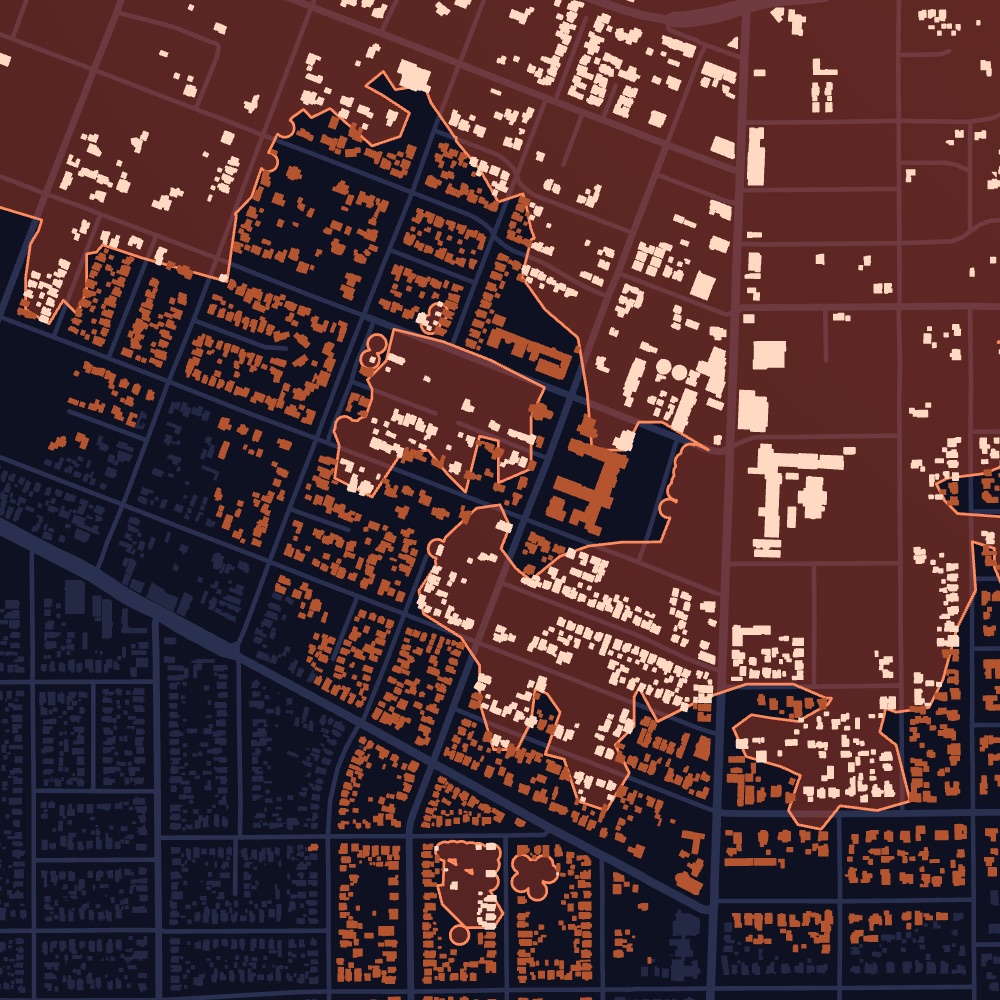
Start with the event, not a list of businesses. Official damage surveys and storm reports show where damage happened and how strong it was. Our guides to the EF scale and NWS Local Storm Reports explain how to read them. Then list the commercial, industrial and multifamily properties in the affected area.
Step 2: Find the real decision-maker
Owner of record is the starting point, not the end. For each property:
- Identify the owner of record (often an LLC)
- Look for the property manager or management company
- Check whether the owner holds other buildings in your territory
- Note the tenant type (warehouse, retail, medical, multifamily)
An owner with several buildings in the footprint is worth a direct call from a senior person, not a form letter.
Step 3: Prioritize the list
- Large flat roofs near the strongest winds come first, especially warehouses and distribution buildings.
- Multifamily buildings follow, because leaks reach residents quickly and managers act fast.
- Owners with several damaged buildings move up regardless of size.
- Buildings outside the confirmed damage wait.
Step 4: Make a useful first contact
Commercial decision-makers get a lot of sales calls after a storm. Stand out by being specific:
- Name the event, the date and what was reported near their building
- Offer a roof inspection with a written report, photos and core samples where needed
- Show commercial experience: membrane types, crew size, insurance limits
- Offer emergency repairs or temporary dry-in if water is getting in
Leave the decision with them, and follow up with the report whether or not they hire you.
Step 5: Turn one job into a relationship
Commercial work grows through portfolios. After a good job, ask for a roof survey of the owner's other buildings, set up a maintenance plan and stay in touch with the property manager. The next storm call should come to you directly.
Commercial roofing checklist
- Event footprint confirmed from surveys or ground reports
- Commercial, industrial and multifamily properties listed inside it
- Owner of record and property manager identified
- Multi-property owners flagged
- Contact made by a senior rep with a specific, dated message
- Inspection reports delivered and logged in your CRM
How Dorothy helps
Loss Engine monitors your territories for tornadoes, hurricanes, wildfires, floods and structure fires, finds the properties inside the damage down to the building and matches each one to its owner of record across more than 155 million property records. Set your criteria to commercial, industrial and multifamily properties and the qualified ones are delivered to your team on your schedule in HubSpot, Pipedrive or CSV. Envoy can run outreach to owners within each state's rules.
Frequently asked questions
How do I find commercial roofing leads after a storm?
Confirm where damage happened, list the commercial properties inside that area, then identify the owner of record and property manager for each one.
Who decides on a commercial roof replacement?
Usually the owner, often through a property manager, facilities team or asset manager. Larger owners may also involve their insurer and lender.
Why are flat roof leads harder to find?
Damage to low-slope roofs is often invisible from the ground. Owners may not know until a leak shows up inside, so reaching them early with an inspection offer matters.
Should commercial roofers chase storms out of state?
Some do. Many find more steady work by covering every event in their own territory and building long-term relationships with local owners and managers.