
Flood Risk by Address: What Property Owners Should Check
To check flood risk by address, start with two free federal sources: the FEMA Flood Map Service Center for the property's official flood zone, and the NOAA Storm Events Database for flood events recorded in the surrounding county. Together they tell you whether a property sits in a mapped high-risk area and whether the area has flooded before. Neither gives you a complete flood history for a single building, so it helps to know what each source covers.
Start with the official flood zone
The FEMA Flood Map Service Center (MSC) describes itself as the official public source for flood hazard information produced in support of the National Flood Insurance Program (NFIP). You can enter an address, a place name or coordinates and view the effective flood map for that location. It's free to use.
The map shows which flood zone the property falls in. According to FEMA's FloodSmart site, the zones break down like this:
| Zone label | Risk level | What it means |
|---|---|---|
| A, AE, AH, AO, AR, A99 | High risk | Special Flood Hazard Area, often near rivers, streams or ponds |
| V, VE | Coastal high risk | High-risk coastal area with added hazard from storm waves |
| B, shaded X | Moderate risk | Usually between the 100-year and 500-year flood limits, or areas protected by levees |
| C, unshaded X | Minimal risk | Usually above the 500-year flood level |
| D | Undetermined | Possible flood hazard, but no analysis has been done |
FloodSmart notes that in communities that participate in the NFIP, flood insurance is required for properties in high-risk zones with government-backed mortgages.
What the flood zone doesn't tell you
A flood zone is a probability, not a history. A building outside a high-risk zone can still flood, and FEMA says so plainly: according to FloodSmart, nearly one-third of NFIP flood claims from 2014 to 2024 came from areas outside high-risk flood areas.
Maps also change. The MSC warns that information you download or print may be superseded by new maps over time, so check the date of the effective map and look again before a purchase or renewal.
Check recorded flood events nearby
The NOAA Storm Events Database, maintained by NOAA's National Centers for Environmental Information (NCEI), holds severe weather records entered by the National Weather Service. You can search by state, county, date range and event type, including Flood and Flash Flood.
A few things to know before you rely on it:
- Coverage starts in 1996 for floods. Older records cover tornadoes, thunderstorm wind and hail. Flood and flash flood events are recorded from 1996 onward.
- Records are by area, not by building. An entry describes an event in a county or zone, sometimes with a narrative naming streets or towns. It won't confirm whether a specific property took on water.
- Damage figures are estimates. NCEI notes that information from these sources may be unverified by the NWS.
It's still a useful free way to see how often an area floods. Flood events are common: according to NCEI, there were 7,374 flood and flash flood events in 2025 that were not tied to tropical systems.
Look at insurance claims in the area
FEMA's FloodSmart site has a Flood Claims in My Area page where you can pick a state and county and see historical NFIP claims. FEMA points out that this only covers claims paid by the NFIP. It doesn't include damage that wasn't insured or was covered by private flood insurance.
Ask about the specific property
Public data stops at the county or the map. For the building itself, ask directly:
- Has the property flooded, and when? Ask the seller, landlord or previous manager. Disclosure rules vary by state, so confirm what's required with your agent or attorney.
- Has a flood insurance claim been paid on it? The current owner or their agent can tell you.
- What's the elevation? An elevation certificate, if one exists, shows how the building sits relative to expected flood levels.
- What do the walls and floors show? Water lines, replaced drywall at the same height, new flooring on a lower level, or mold remediation records.
- Where does water go? Grading, drainage, sump pumps, and whether mechanical equipment sits in a basement.
- What does the local floodplain administrator know? FloodSmart suggests contacting them alongside the MSC. They may know about drainage projects or map changes in progress.
Check your coverage before you need it
According to FloodSmart, most homeowners, renters and business insurance policies don't cover flood damage. Flood coverage usually comes from a separate NFIP or private flood policy.
Timing matters. FloodSmart states that NFIP coverage generally takes effect 30 days after purchase, with exceptions, such as policies bought when making, increasing, extending or renewing a mortgage. If a property is on your list to buy or manage, sort out flood coverage early rather than when a storm is in the forecast.
For portfolios: past risk and current events
A flood history check is a one-time look. If you own or manage many properties, two other questions matter just as much: which of your properties are in the path of a flood right now, and which were actually reached by the last one. Our guide on storm alerts for property managers covers that side.
How Dorothy helps
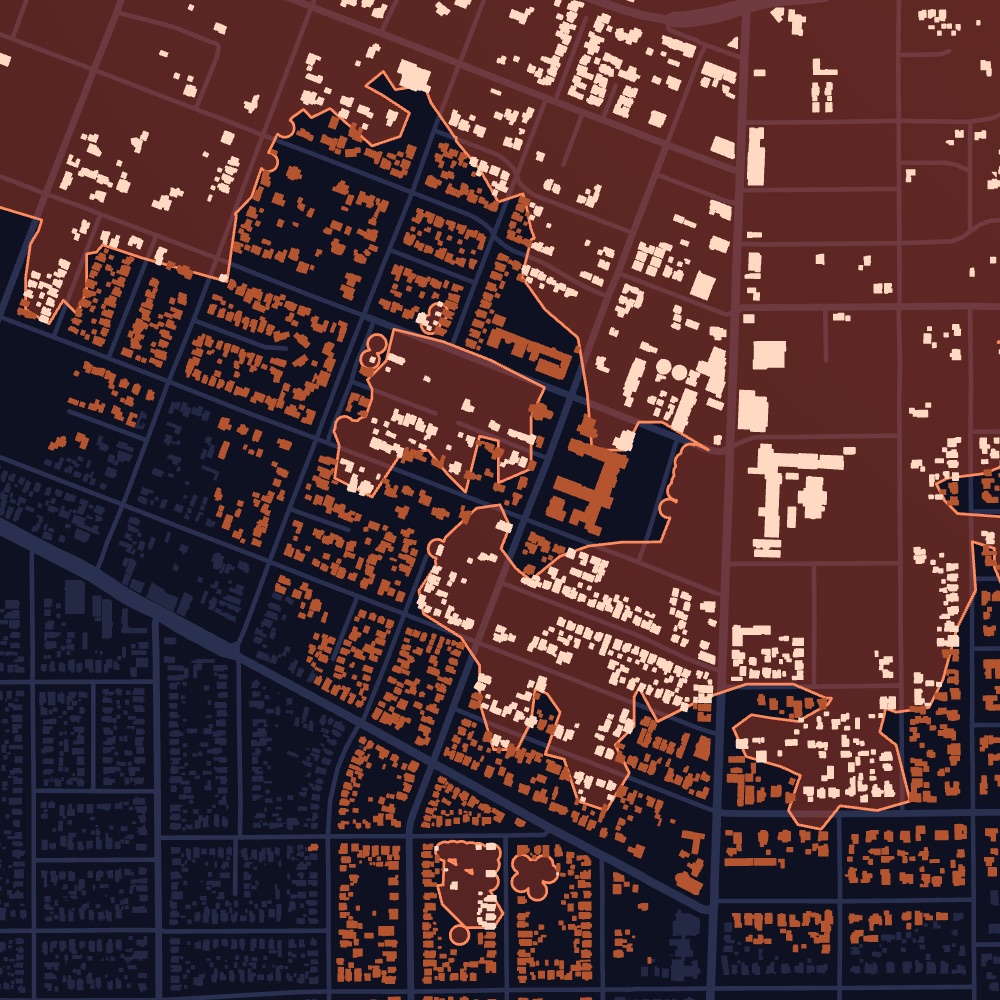
Atlas monitors your property portfolio and alerts you when a flood, hurricane, tornado or wildfire is forecast to reach one of your properties and again when it touches down. Dorothy's flood model shows which properties the water reached and when it peaked, so you see which buildings were affected rather than which counties.
Frequently asked questions
How do I find out if my property is in a flood zone?
Enter the address in the FEMA Flood Map Service Center at msc.fema.gov. It shows the effective flood map and the zone for that location. It's free.
Can I look up a property's flood history by address?
Not completely from public sources. The NOAA Storm Events Database shows recorded flood events by county and date, and FloodSmart shows NFIP claims by county, but neither confirms whether a specific building flooded. Ask the owner and check the building itself.
If a property is in Zone X, does it need flood insurance?
It may not be required by a lender, but FEMA recommends it. According to FloodSmart, nearly one-third of NFIP claims from 2014 to 2024 came from outside high-risk flood areas.
Does a standard property policy cover flood?
Usually not. According to FloodSmart, most homeowners, renters and business insurance policies don't cover flood damage. Check your policy and ask your agent.