
Commercial Wildfire Risk: A Guide for Multi-Site Businesses
Commercial wildfire risk is not limited to remote buildings in the forest. Stores, offices, warehouses and restaurants at the edge of towns can be damaged or closed by a wildfire, and many more are affected by evacuations, smoke, road closures and power shutoffs. Managing that risk means knowing which of your sites sit near wildland, preparing them before fire season, and tracking active fires against your locations as they move.
Wildfire reaches commercial areas
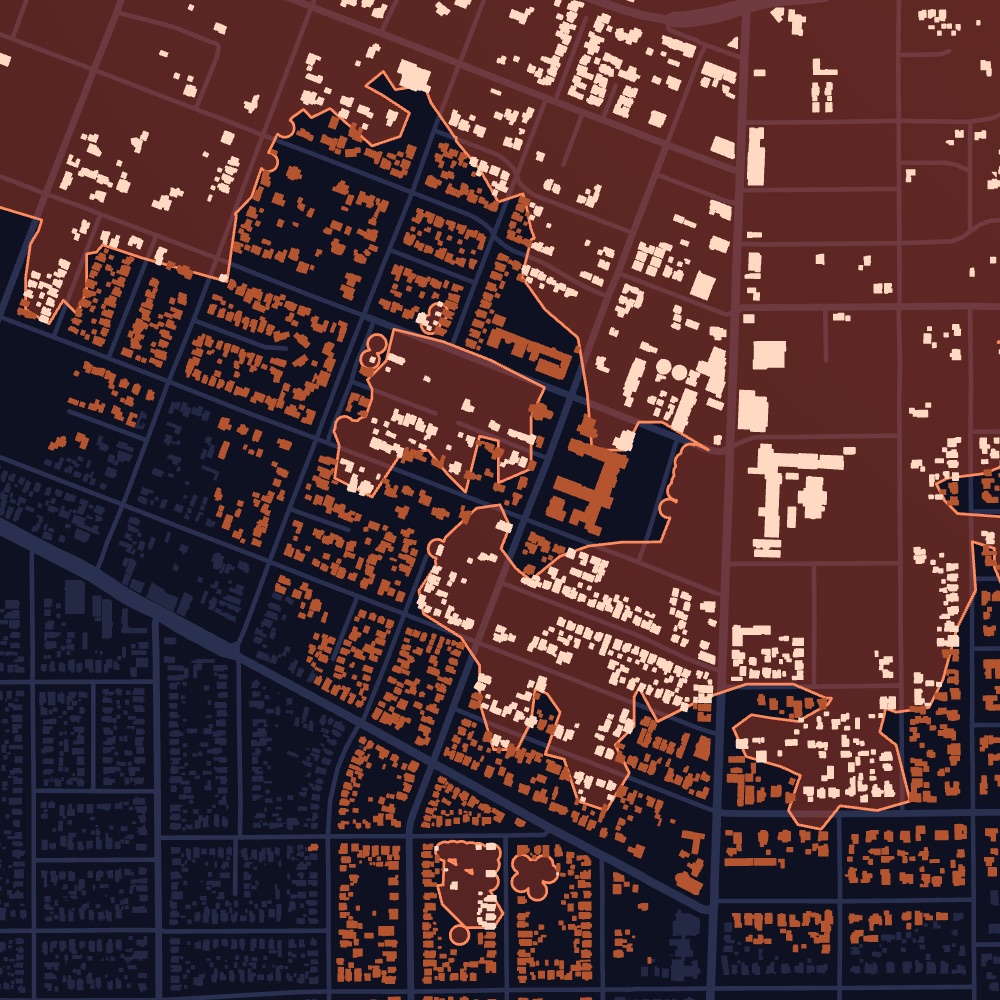
Recent fires have shown how far into developed areas a wildfire can go. In 2025, at least 23 wildfires had more than 50 structures inside the burn perimeter, based on public fire perimeter and building records. The Eaton Fire alone had 10,933 structures inside its perimeter. Those structures include homes, but also shops, offices, restaurants and other commercial buildings.
For a multi-site business, the impact goes beyond buildings that burn:
| Impact | What happens to a site |
|---|---|
| Direct fire damage | Building lost or damaged |
| Embers and smoke | Smoke damage, HVAC and filter contamination, damaged inventory |
| Evacuation orders | Site closed, staff displaced |
| Road closures | Deliveries and customers cannot reach the site |
| Power shutoffs | Site closed or on generator, refrigeration at risk |
| Staff impact | Employees lose homes or cannot get to work |
A location can be closed for days without ever being touched by flames.
Which sites are exposed
Start with your location list and look for sites that:
- Sit at the edge of town where buildings meet open land, brush or forest
- Are surrounded by dry vegetation, landscaping or vacant lots
- Have a single access road
- Are in areas with a history of large fires
- Are in regions where utilities may cut power during high fire danger
- Serve as supply points for other locations in a fire-prone region
Exposure is not only a Western problem, though the West sees most of the large, destructive fires. Grass and brush fires also affect sites in the Plains and the Southeast.
Before fire season: a site checklist
- Map sites against wildfire-prone areas and flag the exposed ones.
- Clear the site. Remove dry vegetation, debris and combustible storage near buildings. Keep pallets and dumpsters away from walls.
- Check the building. Vents, gutters, roof covering and gaps where embers can enter.
- Plan HVAC. Know how to shut off or switch to recirculation when smoke arrives, and keep spare filters.
- Plan for power loss. Generator, fuel, and what happens to refrigerated or frozen inventory.
- Write an evacuation and closure plan. Who decides to close, how staff are told, and how customers and online channels are updated.
- Protect records and equipment. Back up data off site and know what can be moved quickly.
- Line up vendors. Smoke cleaning, restoration, HVAC and filter replacement, board-up.
During a fire: track it against your sites
Wildfires move fast and change direction with the wind. A fire many miles away in the morning can threaten a site by evening. During an active fire:
- Track the perimeter against your locations, not just the fire's name and acreage.
- Watch evacuation orders and warnings from local authorities for each site's area.
- Close early rather than late. Staff safety comes first.
- Communicate closures to staff, customers, suppliers and delivery partners.
- Plan coverage from other locations for customers and orders.
Assign one person to own the site list during the event and update the status of each affected location.
After the fire: find out what happened
Once the fire is contained, compare the final perimeter to your locations.
- Sites inside the perimeter: expect direct damage or heavy smoke. Wait for clearance from authorities before entering.
- Sites near the perimeter: check for smoke, ash and ember damage, and HVAC contamination.
- Sites in evacuation zones: check power, refrigeration and security after a closure.
- All affected sites: document conditions with dated photos before cleanup, for the insurance claim.
Smoke damage is easy to underestimate. Odor and residue can get into HVAC systems, ceiling tiles, merchandise and stockrooms. Professional assessment helps decide what can be cleaned and what must be replaced.
Common mistakes
- Treating wildfire as a risk only for rural or forest sites
- Tracking a fire by name in the news instead of its perimeter against your locations
- Waiting for an evacuation order before planning a closure
- Reopening without checking HVAC and inventory for smoke damage
- Forgetting staff who may have lost their own homes
How Dorothy helps
Atlas monitors your locations for wildfires, along with tornadoes, floods, hurricanes and structure fires, down to the building. It alerts your team when a storm is forecast to hit a site and when it touches down, and shows which locations are affected by a wildfire, so you know which stores, offices and warehouses to check. Alerts can be delivered into HubSpot, Pipedrive or CSV for your team.
Frequently asked questions
Are commercial buildings at risk from wildfire?
Yes. Wildfires regularly reach developed areas, and commercial sites can be damaged directly or closed by smoke, evacuations, road closures and power shutoffs.
How do I know which of my locations are exposed to wildfire?
Map your sites against areas where development meets brush, grass or forest, look at fire history and access roads, and flag sites in regions with power shutoffs.
What should a business do during an active wildfire?
Track the fire's perimeter against your locations, follow local evacuation orders, close early, and keep staff, customers and suppliers informed.
What damage should we check after a wildfire?
Direct fire damage, smoke and ash in the building and HVAC, damaged inventory, and power and refrigeration problems from closures, with dated photos before cleanup.