
Commercial Public Adjuster Leads: How to Find Large Losses
Commercial and large loss claims come from a different set of events and owners than residential work. PA firms that win them consistently watch for structure fires, tornadoes, floods, hurricanes and wildfires that touch commercial property, identify the actual owner behind each building, and reach the person who makes decisions on the claim. The work is slower to find and longer to settle, but each file carries more weight.
What counts as a large loss
Definitions vary by firm, but large loss files usually share a few traits:
- Commercial, industrial, multifamily or institutional property: retail centers, warehouses, offices, apartment complexes, hotels, schools, churches, farms.
- Multiple coverages: building, contents, business interruption, extra expense, ordinance or law.
- Several parties: owners, tenants, lenders, property managers, brokers.
- Long timelines with detailed documentation and, sometimes, appraisal or litigation.
These claims need a team that can handle accounting for business income, building consultants and complex policies. Not every firm should chase them, but firms that can should look for them deliberately.
Where large losses come from
| Event | Typical large loss pattern |
|---|---|
| Structure fire | A single building with heavy fire, smoke and water damage, often with business interruption |
| Tornado | A narrow path that can cross commercial corridors, industrial parks and apartment complexes |
| Flood and flash flood | Ground-floor and basement damage across many buildings in a low area |
| Hurricane | Wind and surge damage across large regions, many commercial owners at once |
| Wildfire | Total losses of whole neighborhoods and commercial districts inside the burn perimeter |
| Wind, alongside other perils | Roof and envelope damage across large flat-roof buildings |
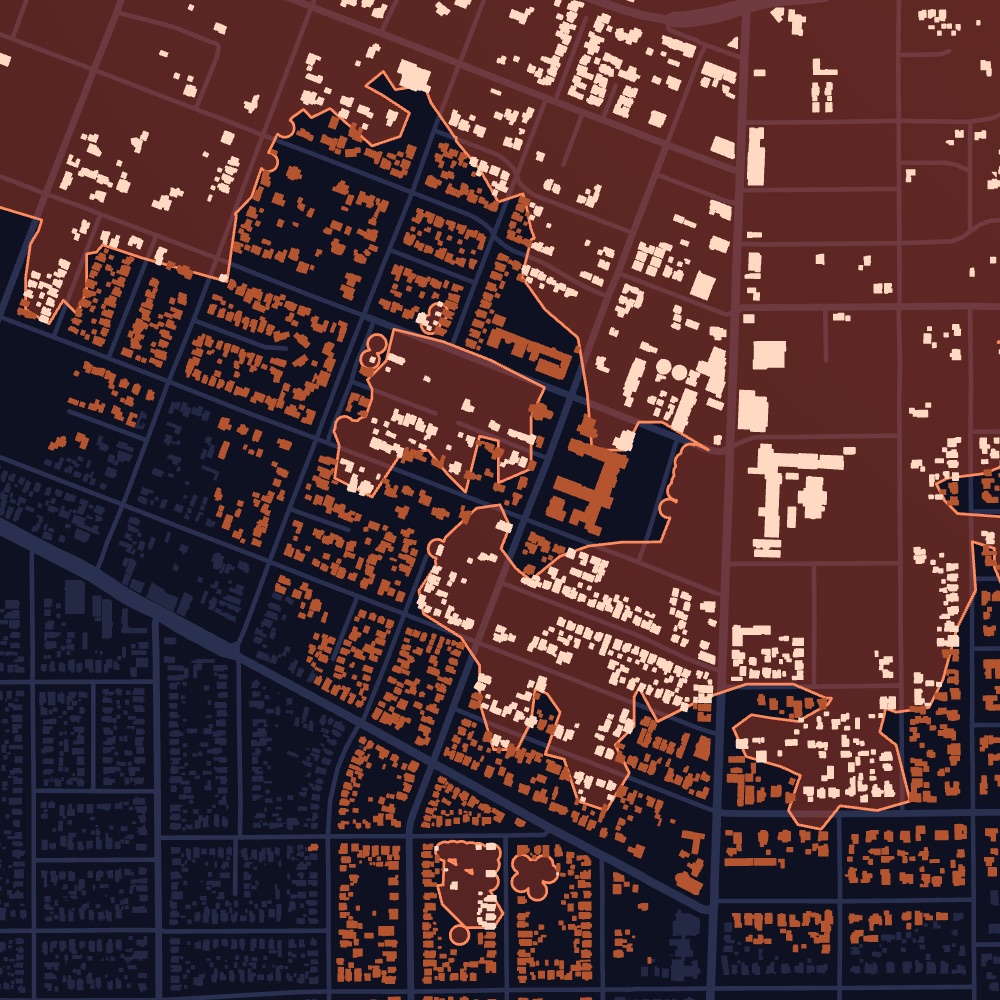
Wildfires show how concentrated large losses can be. Based on public wildfire and building records, at least 23 wildfires in 2025 had more than 50 structures inside the burn perimeter, and the Eaton Fire alone had 10,933 structures inside its perimeter.
Why commercial losses are under-served
Many PA marketing efforts focus on residential neighborhoods, where owners are easy to identify and decisions are personal. Commercial property is harder:
- The owner is often an LLC, a trust or a holding company, not a person.
- A property manager may sit in between, handling the day-to-day but not deciding on representation.
- One owner may hold several affected buildings, sometimes across different events.
- Local news covers fewer commercial losses, especially in industrial areas.
That difficulty is also the opportunity. Firms that do the research face less competition.
Finding the decision-maker
For each affected commercial property:
- Identify the owner of record. Look past the address to the legal owner.
- Look for portfolio owners. Check whether the same owner holds other buildings in the event area or in other recent events.
- Separate owner and manager. Know who manages the property and who signs.
- Check tenant exposure. In retail and office buildings, tenants may have their own contents and business income claims.
- Confirm the loss at the building. Use the fire alert, tornado path, flood area or fire perimeter, plus imagery, to confirm the building was actually affected.
Staying compliant on commercial files
Solicitation rules apply to commercial claims too, with some differences. According to a 2025 attorney-prepared 50-state chart, Kansas licenses public adjusters for commercial claims only, and Tennessee's waiting periods do not apply to commercial insureds. Many states also bar solicitation during the loss-producing event and limit contact hours. See our solicitation rules by state. Rules change; confirm with your state's Department of Insurance and counsel.
Preparing the file before you're hired
Commercial owners and their advisers expect a firm to be organized from the first conversation. Before you meet:
- Confirm the event and the date of loss at the address (how to verify date of loss)
- Gather intensity at the property: tornado rating, flood depth, wind and surge, fire perimeter
- Pull before and after imagery
- Note building type, use, size and owner structure
- List likely coverages to discuss, such as business interruption
This shows the owner you understand their loss before they explain it.
A simple large loss workflow
- Monitor your licensed states for fires, tornadoes, floods, hurricanes and wildfires.
- Filter for commercial, industrial, multifamily and other property types your team handles.
- Qualify each building: confirmed loss, owner identified, fits your criteria.
- Assign large losses to senior staff with commercial experience.
- Track outcomes by event type, property type and owner type.
How Dorothy helps
Loss Engine monitors tornadoes, wildfires, floods, hurricanes and structure fires in your territories, researches and qualifies affected properties, matches each building to its owner of record across 155M+ property records, and delivers the files that fit your criteria to your team on your schedule. Set your criteria around commercial and multifamily property so your large loss team sees the right buildings.
Frequently asked questions
How do public adjusters find commercial claims?
By monitoring events that hit commercial property, confirming which buildings were affected, identifying the legal owner behind each one and reaching the decision-maker, plus referrals from attorneys, brokers and contractors.
What makes a loss a "large loss"?
There's no single definition. It usually means commercial or multifamily property, several coverages such as business interruption, multiple parties and a long, documentation-heavy claim.
Do solicitation rules apply to commercial owners?
Generally yes, though some details differ. In the 2025 attorney-prepared chart, Tennessee's waiting periods do not apply to commercial insureds. Confirm current rules with your state's Department of Insurance and counsel.
Why are LLC-owned properties harder to reach?
The owner of record is a company, and decisions may sit with a manager, partner or asset manager. Research the ownership structure before reaching out.